Whale and Dolphin Watching in Tenerife: A Complete Guide
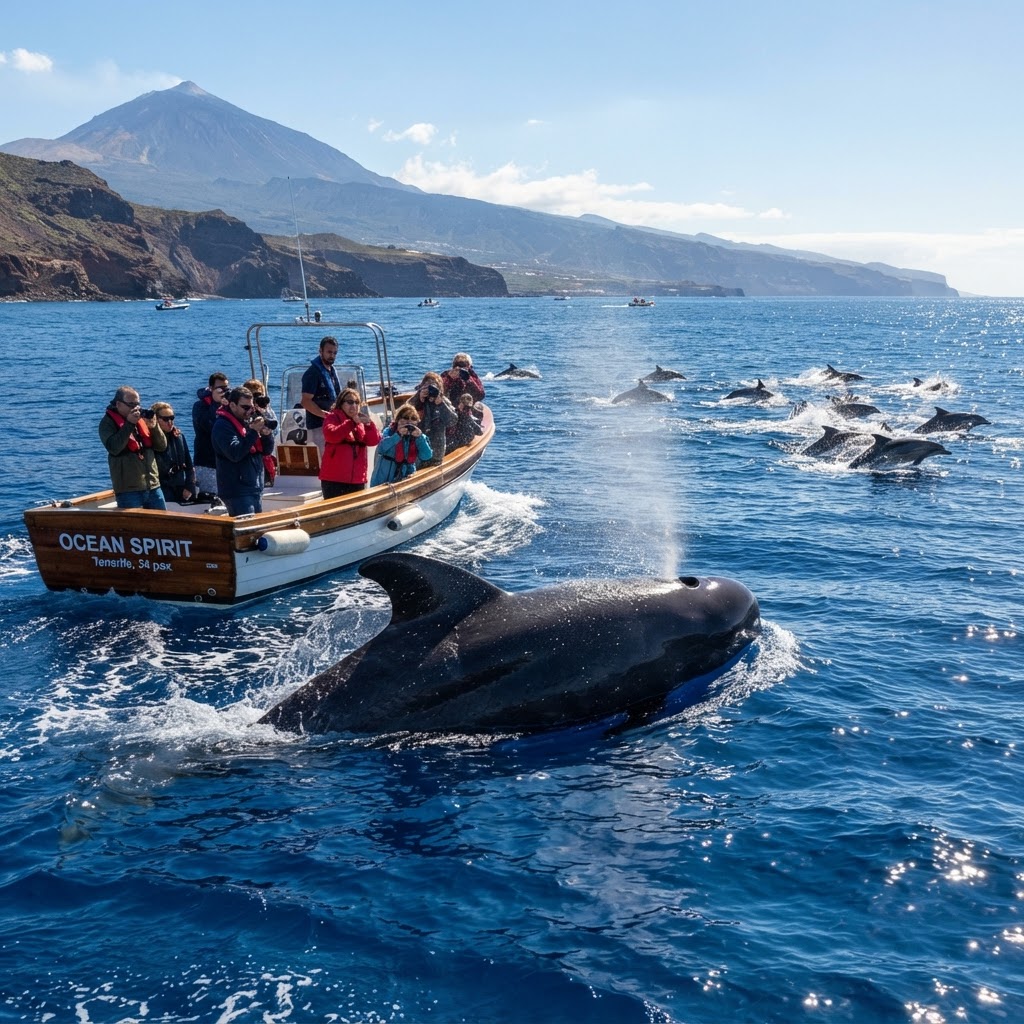
The channel between Tenerife and the neighbouring island of La Gomera is a protected marine area and one of the best places in Europe to observe whales and dolphins in the wild. Resident populations live here all year round, making sightings remarkably reliable.
What you can see
- Short-finned pilot whales — the resident stars, seen on around 90% of trips.
- Bottlenose dolphins — playful and often bow-riding alongside the boat.
- Sperm whales — occasionally spotted in deeper waters.
- Other species — Risso's dolphins, Atlantic spotted dolphins and even orcas are possible at certain times of year.
When to go
Whale watching is excellent year round thanks to the resident pilot whales. Calmer seas in summer make for a smoother ride, while spring brings more migratory species.
Where trips depart from
Most tours leave from the south-west coast — Puerto Colón, Los Gigantes and Costa Adeje — as this is the closest port to the pilot whales' feeding grounds.
Choosing a responsible tour
Not all operators are equal. Look for boats that:
- Respect minimum distances from the animals.
- Avoid crowded groups and don't chase them.
- Are certified by the Barcelona Convention or carry the Blue Flag for whale watching.
- Have biologists or guides on board who explain the animals' behaviour.
What to bring
- Sunscreen, sunglasses and a hat — there is little shade at sea.
- A light windbreaker, as it can be cooler on the water.
- A camera with zoom, but remember to enjoy the moment too.
- Motion sickness tablets if you are sensitive.
Tips for the best experience
- Book a morning trip when the sea is usually calmer.
- Smaller boats offer a more intimate experience than large party catamarans.
- Sunset sailings combine wildlife with a spectacular golden-hour view of Los Gigantes cliffs.
Seeing a pilot whale surface beside your boat is one of the most memorable experiences you can have in Tenerife — and it's available all year round.